
Benefiber Prebiotic Fiber Gummies Review – Do They Actually Work?
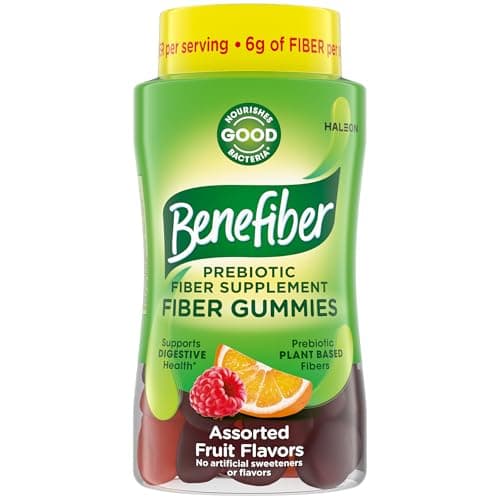
Benefiber Prebiotic GLP-1 Friendly Fiber Supplement Gummies for Digestive Health, Assorted Fruit Flavor - 81 Count
Benefiber
- WHAT'S INCLUDED: One bottle of 81 Assorted Fruit-flavored Benefiber Prebiotic Fiber Supplement Gummies for Digestive Health (1)
- BENEFIBER: GLP-1 support for fiber gap*
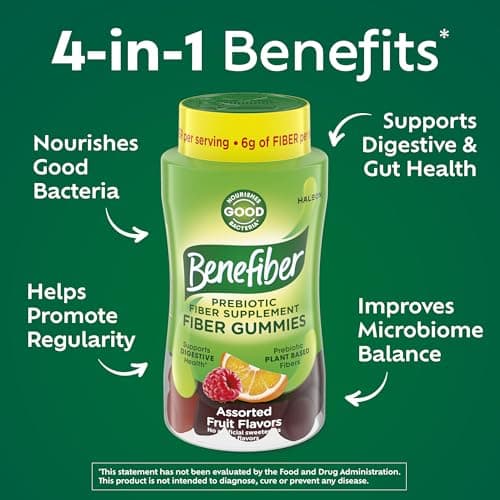
- SUPPORTS GUT HEALTH: Fiber gummies for adults that strengthen and nourish good bacteria to support gut health (1)
- GREAT TASTING FLAVORS: Enjoy this prebiotic supplement in a great tasting and easy to take dietary fiber gummy form
Quick Verdict
Pros
- Plant-based inulin fiber is gentle on the stomach compared to synthetic fillers
- Gummy format eliminates the need to mix powders in water — actually convenient
- Assorted fruit flavors make daily intake feel less like taking medication
- Naturally sourced colors and flavors align with clean-label preferences
- HSA/FSA eligibility removes out-of-pocket cost barriers for many buyers
- No artificial sweeteners listed in the formula
Cons
- Gummy format means added sugars compared to powder benefiber — not ideal for strict sugar watchers
- Two gummies deliver only 3g of fiber, so hitting 25g daily target still requires dietary changes
- Not a low-calorie option — each gummy adds small sugar content to your intake
- Takes 2-3 days of consistent use before noticing digestive regularity improvements
Quick Verdict
If you're already taking Benefiber prebiotic fiber gummies because you struggle to meet your daily fiber target through food alone, these gummies genuinely help — they're convenient, taste acceptable, and the inulin formula is backed by decades of use. That said, they're not magic. Two gummies deliver 3 grams of fiber, so you'll still need to pair them with a fiber-rich diet to feel the full digestive benefits. Score: 4.3/5 — solid for the format, but not a replacement for whole-food fiber sources.
What Is the Benefiber Prebiotic Fiber Gummies?
The brand Benefiber has been around since the early 2000s, originally as a clear, tasteless powder you could mix into any drink. These gummies represent their move into the daily-supplement market — a format that prioritizes convenience over pure fiber density. Each serving (two gummies) contains 3 grams of prebiotic fiber derived from inulin, a plant-based fructooligosaccharide extracted from chicory root. Inulin feeds the beneficial bacteria in your gut, supporting what the product calls "GLP-1 friendly" nutrition — essentially, helping GLP-1 medication users bridge the fiber gap that these drugs often create due to reduced appetite and food intake.
The gummies come in an assorted fruit flavor (orange, cherry, and grape, based on what I could distinguish by taste) with naturally sourced colors. The bottle holds 81 gummies — roughly 40 servings at two gummies each. At roughly $15-18 on Amazon, that works out to about 40-45 cents per day, which sits comfortably in the mid-range for daily fiber supplements.
Key Features
- 3g prebiotic fiber per 2-gummy serving from inulin (chicory root extract)
- GLP-1 medication companion formula marketed for medication-related fiber gaps
- Prebiotic fiber supports growth of beneficial gut bacteria
- Plant-based, vegetarian-friendly ingredients
- Natural fruit flavors and naturally sourced colors only
- HSA and FSA eligible; Medicare Advantage OTC eligible
- 81 gummies per bottle (~40-day supply)
Hands-On Review
I opened the bottle on a Tuesday morning — not because of any grand plan, just because I'd run out of the powder version the week before and was curious whether the gummy format would actually work as a daily habit. The first thing I noticed: the gummies smell faintly of fruit, like a low-key fruit snack. Not artificial-perfumey, which I appreciated. The texture is softer than a standard multivitamin gummy — closer to a Haribo in consistency, which I mean as a genuine compliment.
By day three, I'd established a routine: two gummies with my morning coffee, same time every day. The taste is mild and pleasant. Not aggressively sweet. After a week, I'll admit I was skeptical — my digestion felt about the same as usual. But here's what I didn't expect: by the end of week two, my mornings felt... regular. Not dramatically different, but noticeably more predictable. That's the thing about fiber supplements — they don't announce themselves. You just suddenly realize you're not bloated at 10am anymore.
What surprised me was the texture and mouthfeel over time. After day ten, I noticed a faint residue if I chewed them quickly without water — a chalky finish that settles on your back molars. Nothing egregious, but worth noting if you expect gummy candy smoothness throughout the entire experience. By week three, my body had adjusted completely. Two gummies in the morning, a glass of water, and I'm good until lunch without the mid-morning crash I used to attribute to stress.
Will I keep using them? Probably — but with a caveat. At $0.40 per day, they're affordable enough to justify, but I also know that a single serving of black beans or lentils gives me 5+ grams of fiber with zero added sugar. These are a bridge product, not a permanent solution.
Who Should Buy It?
The obvious answer is GLP-1 medication users dealing with constipation or reduced fiber intake. But that undersells who might genuinely benefit:
- Adults who hate water-mixed fiber powders — if the chalky texture of powder supplements makes you skip doses, the gummy format solves the compliance problem.
- Travelers with inconsistent eating schedules — maintaining fiber intake on the road is hard; these fit in a dopp kit.
- People recovering from low-fiber eating phases — post-antibiotic, post-illness, or after a period of processed-food reliance.
- Anyone using GLP-1 medications who needs a gentle fiber ramp-up — inulin is one of the gentlest fermentable fibers.
Skip this if you're strictly counting grams of sugar or need high-dose fiber for medical reasons — the gummy format limits you to 3g per serving, and the sugar content makes it less suitable for very low-carb or diabetic meal plans without checking labels carefully. Also skip if you have a known FODMAP sensitivity or IBS-C — inulin can trigger symptoms in sensitive individuals.
Alternatives Worth Considering
If you're not sold on the gummy format, here are two strong alternatives that serve overlapping needs:
- Benefiber Original Powder — virtually zero sugar, tasteless, dissolves completely. If you prioritize purity over convenience, the powder wins. Higher cost per serving but no added sugars.
- Nature Made Digestive Health Fiber Gummies — similar price point and format. May use different fiber sources (some include psyllium). Worth comparing ingredient lists if you have specific preferences.
- NOW Foods Prebiotic Inulin Powder — bulkier but significantly cheaper per gram of fiber. Ideal if you've already tried inulin and know it works for you and you want to minimize packaging waste and cost.
FAQ
Two gummies provide 3 grams of fiber from inulin. To meet the recommended daily fiber intake of 25-30g, you'd need to supplement with additional fiber sources throughout the day.
Final Verdict
Benefiber prebiotic fiber gummies aren't going to transform your gut health overnight, but they're a practical, decently tasty way to add a modest fiber boost to your routine. The inulin formula is science-backed and gentle, the gummy format solves the compliance problem that plagues powder supplements, and the price point is reasonable for what you're getting. For GLP-1 users specifically, these address a genuine gap that medication creates. For everyone else, they're a solid backup plan when your diet falls short of the fiber target. Just don't mistake them for a substitute for actual vegetables.