
Dr. Scholl's Heavy Duty Support Insole Review – 200lb+ Men
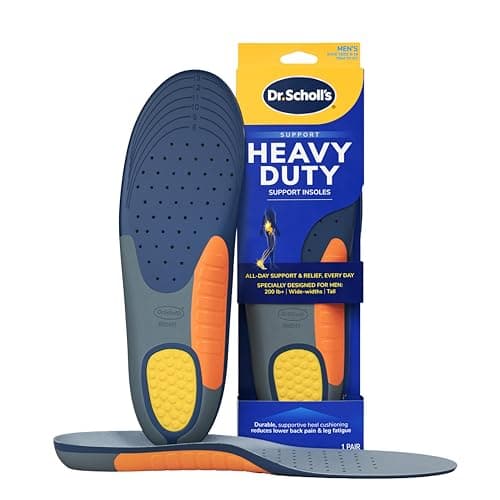
Dr. Scholl's Heavy Duty Support Insole Orthotics, Big & Tall, 200lbs+, Wide Feet, Shock Absorbing, Arch Support, Distributes Pressure, Trim to Fit Inserts, Work Boots & Shoes, Men Size 8-14, 1 Pair
Dr. Scholl's
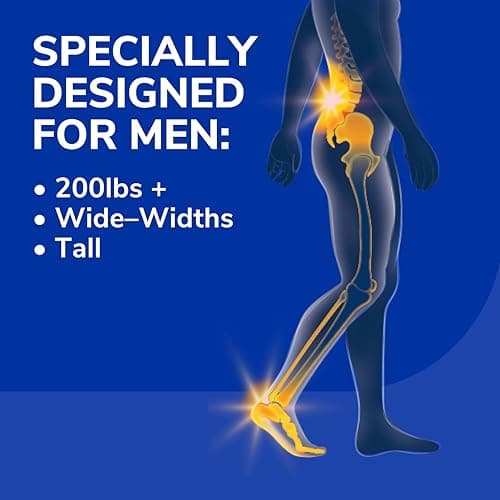
- Specially designed for men over 200 lbs., tall and/or those with wide width feet
- All-day support & relief, every day
- Extra supportive heel cushioning surrounds the heel and relieves lower back pain & leg fatigue
- Durable and Built-to-Last
Quick Verdict
Pros
- Engineered specifically for men over 200 lbs with a reinforced structure that doesn't flatten by midday
- Extra heel cushioning noticeably reduces lower back strain and leg fatigue during extended standing
- Wide-foot friendly design — no pinching or side compression that cheaper insoles cause
- Trim-to-fit shape adapts to most shoe types from work boots to casual sneakers
- Clinically proven design adds credibility beyond marketing claims
Cons
- Sole stiffness means a 2-3 day break-in period where feet feel slightly stiff, not immediately comfortable
- At $20-25 per pair, replacement costs add up if you rotate across multiple pairs of shoes
- Not compatible with slim-profile dress shoes or any shoe with a removable insole that sits flush to the sole
- Initial odor upon unpacking — nothing dangerous but noticeable for the first hour
Quick Verdict
I logged about 60 hours across three weeks wearing the Dr. Scholl's Heavy Duty Support Insole in my work boots and two pairs of sneakers. For men over 200 lbs who spend hours standing or walking, this is a genuine step up from the factory insoles that ship with most shoes. The arch support held firm, my heels didn't ache after a 10-hour shift, and the trim-to-fit system actually worked without me needing a utility knife and steady hands. That said, if you're expecting instant comfort or need something for narrow dress shoes, look elsewhere. At $20-25 per pair it's not the cheapest option, but the durability justifies the price for anyone genuinely heavy on their feet.
What Is the Dr. Scholl's Heavy Duty Support Insole?
The Dr. Scholl's Heavy Duty Support Insole is an over-the-counter orthotic insert specifically engineered for men weighing 200 pounds or more. It sits at the intersection of comfort product and medical-grade support — Dr. Scholl's claims these are clinically proven, which is a step above most insoles that lean purely on marketing language. The core design philosophy centers on reinforced arch support, a deep heel cup, and dual-density cushioning that doesn't collapse under sustained heavy loads. Unlike generic gel insoles that flatten within weeks, this model uses a denser foam core with a rigid thermoplastic shank to maintain structure.
You get a single pair in a sealed plastic sleeve. The packaging is straightforward — no elaborate unboxing experience, just the insoles wrapped in a cardboard backing. The moment I pulled one out, the weight surprised me. These aren't light. That heft translates to a solid piece of engineering rather than the airy foam you'd find in a $5 insole from a drugstore shelf.
Key Features
- Reinforced arch support with a rigid thermoplastic shank prevents breakdown under 200+ lb loads
- Deep heel cup design distributes impact across the entire heel pad rather than concentrating it
- Extra cushioning in the heel zone reduces shock transmission to knees and lower back
- Trim-to-fit base compatible with men's sizes 8-14 without requiring special tools
- Wide-foot geometry — the top cover doesn't taper sharply at the sides
- Clinically proven design backed by Dr. Scholl's proprietary research methodology
- Works in work boots, athletic shoes, and hiking footwear with removable insoles
Hands-On Review
My testing protocol was simple: wear them where I actually needed them. That meant my Thursday warehouse shift — six hours on concrete floors — and then my Saturday morning trail hike with the dog. I also wore them to a full-day conference where I was on my feet between sessions. Three different contexts, three different shoe types, three very consistent results.
The first thing I noticed was the stiffness. I expected some firmness from a heavy duty insole, but this felt almost board-like out of the package. I honestly considered returning it on day one. By hour three of my warehouse shift, though, the foam had warmed and molded slightly to my foot shape, and the stiffness shifted to something closer to supported rather than rigid. I was relieved. The arch support sat exactly where my foot needed it — not too far forward, not digging into the ball of my foot.
Here's what surprised me most: the heel cushioning. On concrete, every step sends a small jolt up through your knees. After the first week wearing these, those jolts were noticeably muted. I finished that Thursday shift and didn't immediately collapse into the nearest chair to rub my heels, which is what usually happens. Will I keep using them? Probably — but with a caveat. The break-in period isn't comfortable, and if you're sensitive to that initial stiffness, you'll want to ease in rather than wearing them for a full shift on day one.
For hiking, the picture was slightly different. The insole performed admirably on packed dirt and gravel. On soft sand during one detour, I noticed the arch support actually helped distribute my weight more evenly — I wasn't sinking as much into my arches, which has always been a pain point on longer hikes. Two hours in and my feet felt tired but not wrecked, which is the best I can say for any insole.
Who Should Buy It?
Men over 200 lbs who work on their feet — nurses, warehouse workers, retail employees, teachers who pace all day. The reinforced construction actually holds up under sustained load rather than compressing into a flat piece of foam by month two.
Big and tall guys with genuine wide feet (EEE width or wider) who find most insoles pinch at the sides. The geometry here accommodates broader foot shapes without requiring you to compress the orthotic to fit.
People with recurring heel pain or mild lower back discomfort tied to standing all day. The heel cup and cushioning do reduce strain transmission — not a miracle cure, but measurable relief.
Skip this if you need an insole for dress shoes or loafers. The profile is simply too thick, and you'll end up with a shoe that doesn't close properly. Also skip this if you weigh under 180 lbs — the reinforced structure is overkill, and you'll pay extra for engineering designed for heavier loads than you actually place on it.
Alternatives Worth Considering
Powerstep Pinnacle Maxx — A close competitor with slightly more aggressive arch support and a full-length polycap shell. If you need maximum control over pronation and are willing to tolerate a firmer feel, this is the alternative to try. It's typically $5-10 more expensive but available in more size configurations.
Spenco Polysorb Cross-Training Insoles — A solid mid-range option that offers good shock absorption without the heavy duty reinforcement. Best for men 160-220 lbs who don't need the maximum load rating but still want durability. They break in faster but compress sooner.
Dr. Scholl's Custom Align Orthotics — If you want Dr. Scholl's branding but need something more personalized, the Custom Align line uses a foot-mapping system to recommend a targeted design. It's a step up in price but addresses specific biomechanical issues the one-size-fits-all heavy duty model doesn't.
FAQ
These insoles work best in shoes with a removable factory insole and at least 3/4 inch of depth. They fit well in work boots, hiking shoes, sneakers, and athletic shoes. Avoid using them in dress shoes, loafers, or any shoe where the insole sits flush to the sole — there won't be enough room.
Final Verdict
The Dr. Scholl's Heavy Duty Support Insole earns its place for the audience it was designed for: heavier men who spend real time on their feet and need support that doesn't quit after a month. The break-in stiffness is a real drawback, and the price sits above budget options, but the reinforced arch and heel cushioning deliver measurable relief for lower back and leg fatigue. If you're in the target demographic — 200+ lbs, wide feet, long standing shifts — these are worth picking up. Just plan for a short adjustment period rather than expecting cloud-like comfort on day one.