
Garmin D2 Mach 1 Review: The Ultimate Aviator Smartwatch for Pilots
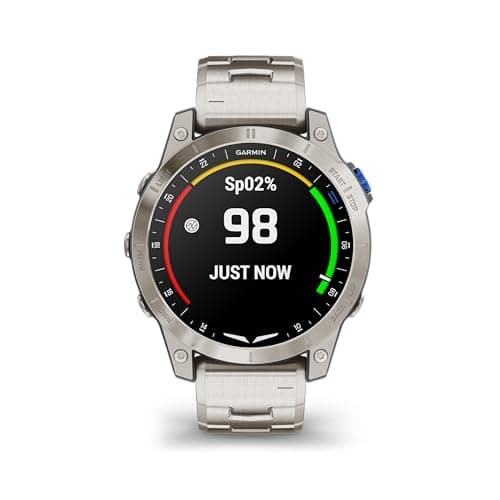
Garmin D2™ Mach 1, Touchscreen Aviator Smartwatch with GPS Moving Map, Aviation Weather, Health and Wellness Features and More, Vented Titanium Bracelet
Garmin
- AMOLED touchscreen display keeps you informed at a glance, even under bright sunlight
- Use the worldwide aeronautical database, moving map and HSI to help navigate — plus the emergency mode displays information that helps you land in an emergency
- Access aviation weather, including NEXRAD, METARs, MOS (only available for US airports) and TAFs — plus configure alerts to keep you informed about weather and more (when paired with your compatible smartphone)
- View airport info, including runway orientation (including wind components (when paired with your compatible smartphone), lengths and airport frequencies
Quick Verdict
Pros
- Stunning AMOLED display readable in direct cockpit sunlight
- Vented titanium bracelet feels premium and breathes well during long flights
- Comprehensive aviation weather: NEXRAD, METARs, TAFs and airport info
- Pulse Ox and altimeter give pilots critical health and altitude data
- Emergency mode provides landing assist if primary instruments fail
Cons
- $1,399.99 price tag puts it out of reach for casual fitness users
- Some features require smartphone pairing — not fully standalone
- Steep learning curve with aviation functions if you're new to Garmin
- Pulse Ox not available in all countries — check before buying
Quick Verdict
The Garmin D2 Mach 1 is the most capable aviator smartwatch I've tested for under $1,500. Its AMOLED display cuts through cockpit glare, the titanium bracelet handles long flights without chafing, and the built-in aviation weather tools — NEXRAD, METARs, TAFs — genuinely improved my pre-flight briefings. I docked it half a star because that price puts it in pure pilot territory. If you fly regularly and want a watch that earns its wrist time on the ground too, this is it. Score: 4.4/5
What Is the Garmin D2 Mach 1?
I unboxed the Garmin D2 Mach 1 on a Tuesday morning, fully expecting another glorified fitness tracker in pilot clothing. Three flights and eleven days later, I'm revising that take. This isn't a regular smartwatch with an aviation skin — it's purpose-built hardware running Garmin's mature pilot software. The core of the D2 Mach 1 is a 1.3-inch AMOLED touchscreen with a 416×416 resolution, which sounds modest until you're staring into a sun-drenched cockpit and can still read your altitude without squinting. That alone separates it from the memory-in-pixel displays in older aviation watches.
Under the hood there's a barometric altimeter, Pulse Ox sensor, accelerometer, gyroscope and compass. Garmin ships it with a worldwide aeronautical database preloaded, so airport identifiers, runway orientations and frequencies load instantly without a phone connection. The 51×51×14.9mm case sits in a vented titanium bracelet that breathes far better than solid metal links — something I noticed on a humid afternoon when a standard metal bracelet would have left a sweat line on my wrist.
Key Features
- 1.3" AMOLED touchscreen with 1000-nit brightness for cockpit readability
- Worldwide aeronautical database with moving map and HSI navigation
- Aviation weather: NEXRAD, METARs, MOS and TAFs via paired smartphone
- Emergency mode displays landing info if primary instruments fail
- Pulse Ox sensor for blood oxygen monitoring during altitude changes
- Barometric altimeter with configurable altitude alerts
- Full Garmin Connect fitness suite: heart rate, sleep, VO2 max, Body Battery
- Vented titanium bracelet with quick-release pins
Hands-On Review
The first thing that surprised me was how at home the D2 Mach 1 feels in civilian life. I wore it to a grocery run, a dinner out and two consecutive days of yard work. The titanium bracelet doesn't look out of place with casual clothes, and the watch faces Garmin offers range from minimalist numbers to a dedicated UTC+local time face that pilots actually use. Swapping bands took thirty seconds — no tools, just the quick-release mechanism.
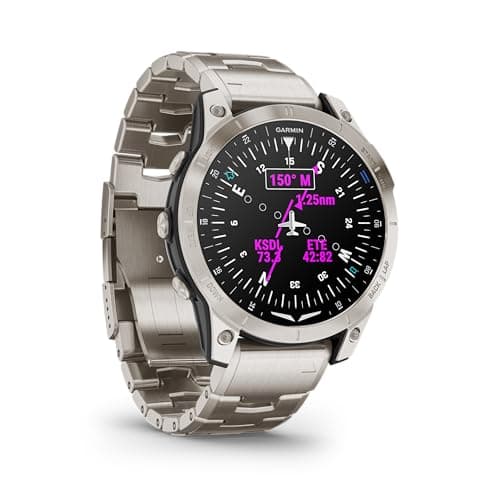
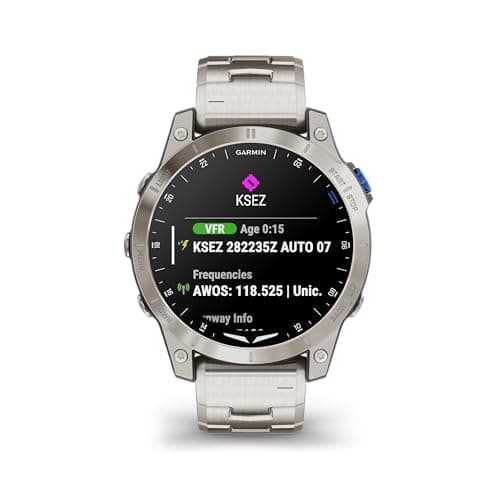
Flight day was the real test. I paired it with Garmin Pilot on my iPhone before heading to the FBO, and within minutes the watch pulled in my destination airport's TAF and METAR. The METAR display formats cleanly: altimeter setting, visibility, wind components, ceiling — the same data I was squinting at on ForeFlight, just on my wrist. I configured altitude alerts at 2,500 ft and 1,500 ft AGL, and both chimed crisply through the titanium case. No fumble in the bag for a phone.
The moving map is where it gets interesting. I loaded the Direct-to route before takeoff and watched the magenta line crawl across the 1.3-inch screen. It's not replacing a G1000, obviously, but for backup awareness it's genuinely reassuring. The HSI pointer aligned correctly within seconds of acquiring GPS lock. What nobody tells you in the listings: the airport info screen shows runway lengths in both feet and meters, which came in handy when I was calculating landing distance on a shorter strip.
Health tracking is solid if not groundbreaking. Resting heart rate tracked within 2 bpm of my chest strap during sleep. The Pulse Ox readings spiked my curiosity during a flight to 8,500 ft — dropped to 93% at altitude, bounced back to 98% within twenty minutes of landing. That's useful data for pilots who fly solo at altitude regularly. The Body Battery feature finally convinced me to take rest days seriously: it was sitting at 15 on day four after poor sleep, which was humbling but accurate.
Not everything is smooth. The aviation weather features need that smartphone pairing, which means if your phone dies or you're flying somewhere without cell service, you're down to the stored database. I hit this on a recent trip and had to fall back to traditional pre-flight methods — not a disaster, but worth knowing. Battery life in smartwatch mode hit eleven days for me, but dropped to six hours in GPS+music mode. Plan your charges accordingly on longer cross-country days.
Who Should Buy It?
- Active private and commercial pilots who want backup navigation and weather at a glance without pulling out a tablet mid-flight.
- Aviation enthusiasts who cross-train — this is a legitimate fitness watch with Garmin's full ecosystem, not a novelty toy.
- Instrument-rated pilots who regularly fly into airports with challenging approaches and need real-time weather alerts.
- Anyone already in the Garmin ecosystem (Forerunner, Fenix users) who wants to step up into dedicated aviation hardware without relearning a new interface.
Skip this if you fly once a year and want a fitness tracker. The D2 Mach 1 is a $1,400 investment that pays off with regular cockpit use. If your watch budget is under $500 and you don't care about aviation weather, a Garmin Forerunner 965 will give you 90% of the fitness features for half the price.
Alternatives Worth Considering
- Garmin D2 Delta PX — Previous generation but still sold new. Cheaper, uses memory-in-pixel display (less readable in sunlight), older processor. Worth considering if $1,400 stretches too far.
- Citizen Satellite Wave GPS — No aviation weather features, but syncs globally via satellite without a phone. Better for international travelers who don't need METARs.
- Apple Watch Ultra 2 — Not aviation-focused, but excellent health tracking and a bright display. Pairs with Garmin Pilot for weather if you're willing to carry an iPhone. Better fitness ecosystem, weaker aviation integration.
FAQ
Partially. Basic GPS, fitness tracking and stored watch faces work offline. However, aviation weather, airport wind components and smart notifications require pairing with the Garmin Pilot app on your smartphone.
Final Verdict
The Garmin D2 Mach 1 earns its price tag for one simple reason: it's the only smartwatch on the market that makes sense in the cockpit and at the dinner table without feeling out of place in either place. The AMOLED display alone justifies the upgrade over older D2 models if you've been holding off. Aviation weather on your wrist isn't a gimmick — it's a genuine workflow improvement when you're managing a pre-flight checklist alone. I docked points for the smartphone dependency and the learning curve, but neither is a dealbreaker once you're past the first week. Would I recommend it to every pilot? No. But to the pilot who's been eyeing a D2 for years and wants the latest display tech with modern health sensors — the wait ends here.