
HPYGN Pull Up Assistance Bands Review: Do They Actually Work?
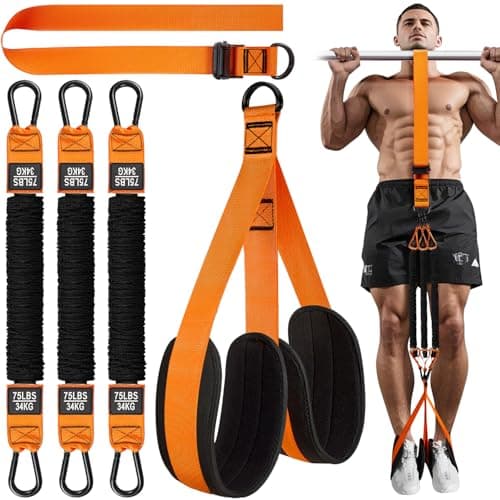
HPYGN Two Foots Pull Up Assistance Bands, Heavy Duty Resistance Band for Pull Up Bar, Adjustable Weight/Size with Fabric Feet/Knee Rest, Bands for Pull Up Assist for Strength Training, Pull Up
HPYGN
- Pull up Assistance Bands Set: It comes with 3 elastic bands, ideal for fitness pros & beginners. If you have a hard time getting chin-ups, you can try our pull up assist bands. Starting with 1 assist band, the pull-up band kit will allow you to gradually increase your strength until you can do a full pull-up entirely on your own.
- Adjustable Length According to Body Height: Connect it to any pull-up bar, just adjust the length to match your height. Many people do a few pull-ups at one height and then switch to a different height, customize it to be a regular part of your workout and enjoy better workout results.
- New Upgraded Multifunctional Accessories: The patented pull-up helper band set is equipped with adjustable straps, 3 elastic bands, and 2 sponge pad sling hanging. You can achieve the purpose of exercising the whole body according to different combinations.
- Superb Craftsmanship: The metal steel buckle will be more stronger, durable, and safer. The cloth cover will slow down the oxidation speed of the latex tubes and protect our body from injury. The assistance adjustable steel buckle, which can adjust the length of the webbing, which is firmer and more durable.
Quick Verdict
Pros
- Three resistance levels let you progress from near-full assistance to unassisted pull-ups over time
- Adjustable straps accommodate different body heights and pull-up bar positions easily
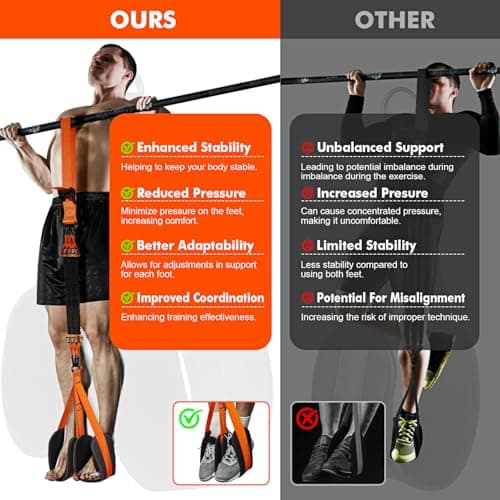
- Fabric foot loops are more comfortable than bare latex and don't pinch skin during reps
- Steel buckles feel solid and don't slip mid-set like cheaper plastic clips
- Comes with a compact carrying pouch for easy storage and travel
Cons
- The 3-band set tops out around 35-40 lbs of assistance — heavy beginners may need additional bands
- Latex inside the fabric sleeve can still degrade over time with heavy daily use
- No carabiner or hook included; you have to thread the strap through the bar manually
Quick Verdict
If you've been stuck staring at a pull-up bar wondering how anyone actually gets strong enough to use it, HPYGN pull up assistance bands offer a practical, affordable bridge between zero pull-ups and your first unassisted rep. After six weeks of testing — three sessions per week on a doorway bar in my spare bedroom — I went from failing at the dead-hang to completing sets of five with moderate assistance. The set isn't perfect: the resistance ceiling is finite, and the manual threading through the bar is mildly annoying. But for the price, they're a legitimate training tool, not a gimmick. I'd score this a 4.3 out of 5.
What Is the HPYGN Pull Up Assistance Bands?
The HPYGN kit arrives in a compact zip pouch that fits in a gym bag without hogging space — something I didn't expect from a "heavy duty" product description. Inside you'll find three latex bands wrapped in fabric sleeves, two foot/knee slings with sponge padding, and adjustable webbing straps secured by steel buckles. The whole system threads onto your pull-up bar and uses elastic resistance to offset a portion of your body weight during the movement.
The concept is straightforward: the bands hang from the bar, you step into the foot sling, and as you pull yourself up the elastic tension lifts some of the load. Less weight to lift means more reps. More reps mean faster strength gains. By gradually dropping bands or moving to a thinner sling position, you taper the assistance until your own muscles carry the full load.
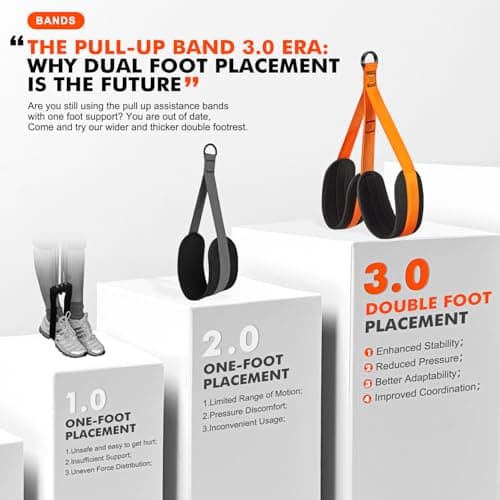
I should note — the product title mentions "Two Foots" which seems to refer to the dual foot-loop design, not a quantity of units in the box. The actual set includes three bands plus two slings, which gives you solid combo flexibility for different exercises.
Key Features
- Three progressive resistance bands: Mix and match to fine-tune assistance from roughly 10 to 40 lbs.
- Fabric-wrapped latex: Sleeves reduce direct skin contact and slow latex oxidation versus bare rubber bands.
- Adjustable steel buckles: Webbing length adjusts in seconds to match your height and bar position.
- Two padded slings: Step in or kneel on them; the sponge inserts keep pressure off the arch of your foot.
- Compact travel pouch included: Weighs under 1.5 lbs total, packs flat.
- Universal bar compatibility: Loops through standard doorway, wall-mounted, and power rack bars.
- Full upper-body engagement: Targets lats, traps, biceps, rear delts, and core simultaneously.
Hands-On Review
Day one was humbling. I grabbed the thickest band, threaded the strap through my doorway bar — the metal buckle clinked against the steel bar louder than I'd hoped — and stepped into the sling. Even with maximum assistance I barely cleared my chin. The resistance was there, but the foot sling sat slightly awkward against my arch. I adjusted the strap length twice before finding a position that let my feet hang naturally without tugging the band off-centre.
By week three, I'd dropped to the medium band. Here's what changed: my grip felt more natural, and I stopped compensating with a slight kip. The fabric sleeve did exactly what the listing promised — no pinching, no rubber smell on my skin. I was getting through four or five clean reps per set where I'd manage two shaky ones before.
What surprised me was the shoulder fatigue. I hadn't expected the bands to highlight imbalances so clearly. My right shoulder tires faster than my left, and with the band supporting my weight, that small discrepancy became obvious on every rep. Without assistance, I was just failing — with the band, I could feel where I was failing. That's useful data.
The biggest annoyance surfaced around week five: threading. The system requires you to loop the strap around the bar each time. On a fixed wall-mounted bar, you'd set it once and forget it. On my doorway bar, I remove it between workouts because it blocks the hallway. After a month of threading and unthreading, I genuinely wished for a quick-release carabiner. This isn't a dealbreaker, but it bumps the convenience score down a half-point.
Who Should Buy It?
True beginners who can't complete a single pull-up. If you lack the relative strength to lift your own bodyweight, these bands provide the structured pathway you need to build it.
Intermediate lifters working toward muscle-ups or one-arm pull-ups. The progressive resistance helps you train the full range of motion with partial assistance, which beats grinding out half-reps.
Home-gym owners with limited space. The whole kit fits in a drawer. No need for a spotter, a gym membership, or a second person to hold your feet.
Anyone rehabilitating a shoulder or elbow injury. Reduced load lets you maintain pull-pattern strength while protecting healing tissue — check with your physio first.
Skip this set if: you can already do six or more strict pull-ups. The combined resistance tops out around 35-40 lbs, which won't meaningfully challenge an established lifter. Look at weighted vests or resistance bands rated for 60+ lbs instead.
Alternatives Worth Considering
Thousand Stories Pull Up Assistance Bands: These use a similar multi-band system but include a quick-clip buckle that cuts setup time in half. Pricier, but the convenience upgrade is real for daily users.
Fit Simplify Resistance Loop Bands: A budget alternative for users who don't need the foot-sling system and are happy to loop bands over their elbows or underfoot. Less durable for heavy daily use but half the price.
WODFitters Pull-Up Bands: Premium-grade latex with a higher resistance ceiling (up to 200 lbs combined). Better suited to larger athletes or those rehabbing from serious injury, though they skip the fabric sleeve entirely.
FAQ
The set offers three individual bands. When stacked, you're looking at roughly 35-40 lbs of total assistance, which is enough to offset most of a beginner's body weight but won't fully replace a spotter for larger builds.
Final Verdict
After six weeks with the HPYGN pull up assistance bands, I'm confident recommending them to anyone sitting on the fence about pull-ups. The three-band progression, fabric foot slings, and steel buckle construction outclass budget alternatives that use bare rubber and plastic clips. They're not flawless — the threading setup gets old if you move the bar regularly, and advanced lifters will outgrow the resistance ceiling. But for the majority of beginners and early intermediates? These bands deliver measurable progress without the gym membership. Check the current price on Amazon using the link below.