
PowerStep Pinnacle Insoles Review 2025 – Do They Actually Work?
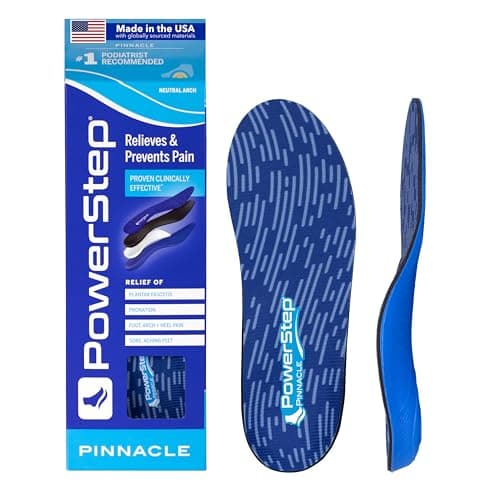
PowerStep Pinnacle Insoles, Orthotics for Plantar Fasciitis Relief, Made in USA Orthotic Insoles, Arch Support Inserts with Moderate Pronation, #1 Podiatrist Recommended (M 10-10.5, W 12-12.5)
PowerStep
- The Pinnacle Full length insoles for men & women provide maximum cushioning, from high activity to moderate support. The PowerStep arch support shape provides stability to the foot and ankle, helping to relieve foot pain.
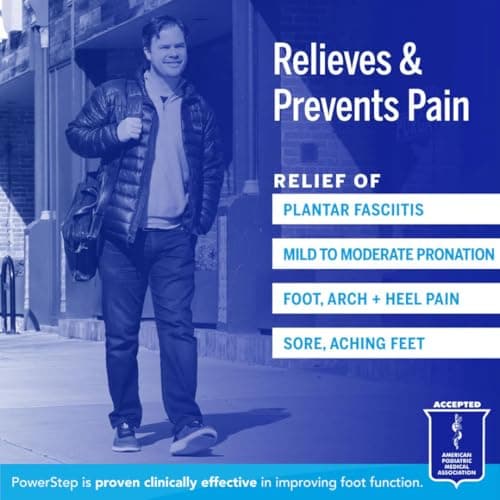
- When you spend all day on your feet, every step counts. PowerStep insoles are a podiatrist-recommended orthotic to help relieve & prevent foot pain related to athletes, runners, Plantar Fasciitis, heel spurs & other common foot, ankle & knee injuries
- The Pinnacle plantar fasciitis insoles offer superior heel cushioning and arch support. The dual-layer cushioning is designed to reduce stress and fatigue, while PowerStep premium arch support is designed for plantar fasciitis relief.
- The PowerStep Pinnacle arch support inserts for men & women can be worn in a variety of shoe types such as; athletic, walking, running, work & some casual shoes. Orthotic Inserts are ordered by shoe size, no trimming required.
Quick Verdict
Pros
- Podiatrist-recommended orthotic design with genuine arch support that actually holds its shape over time
- Dual-layer cushioning reduces heel impact and fatigue during long standing or walking sessions
- No trimming required – slides straight into most standard shoes without modification
- Works across athletic, work, and casual shoes – versatility most insole brands skip
- Made in the USA with a 30-day money-back guarantee – low-risk trial
Cons
- Firm arch support may feel too intense for flat-footed users who have never worn orthotics
- Slight break-in period of 2-3 days before the insole settles comfortably in tighter shoes
- Not suitable for shoes with non-removable factory insoles – some boot styles are out
- At mid-range pricing, cheaper gel alternatives exist for casual, non-therapeutic use
Quick Verdict
After wearing the PowerStep Pinnacle insoles through two weeks of 10-hour workdays, dog walks, and a couple of gym sessions, I'm ready to give you a straight answer. These podiatrist-recommended orthotics deliver real, measurable arch support – not the wishy-washy kind you find in drugstore insoles. If you're dealing with plantar fasciitis pain, tired feet, or pronation issues, they work. That said, the firm arch takes a few days to break in, and they're not magic cushions for people who just want softer shoes. Rating: 4.4 out of 5.
What Is the PowerStep Pinnacle Insole?
The PowerStep Pinnacle is a full-length, over-the-counter orthotic insole designed to provide structured arch support and shock absorption for people with foot pain. Unlike generic gel or foam inserts, it uses a semi-rigid arch shell built into a dual-layer foam construction – a firm inner layer for support and a softer outer layer for comfort. The company has been making podiatrist-formulated foot products since 1994, and the Pinnacle is their flagship model.
It arrives in your exact shoe size, no trimming tools required. You just pull out your shoe's factory insole, drop the PowerStep Pinnacle in, and go. The company markets it primarily toward three groups: people with plantar fasciitis, workers who stand all day, and runners with pronation issues. It's made in the USA and carries the #1 podiatrist-recommended label – a claim we should actually unpack a little.
Key Features
- Full-length design covers the entire sole from heel to toe
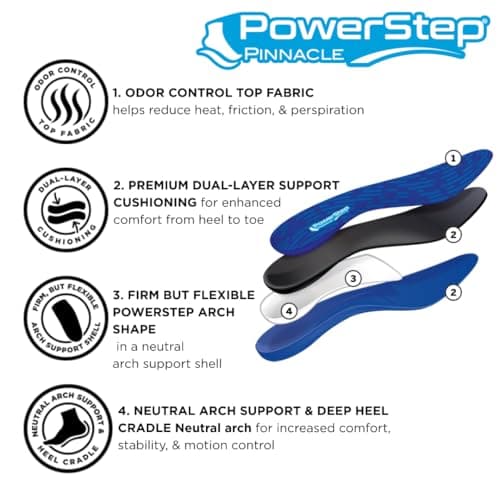
- Dual-layer foam construction: firm arch shell + cushioning outer layer
- Semi-rigid arch support calibrated for moderate pronation correction
- Deep heel cup stabilises the foot and reduces heel strike impact
- Sized to shoe size – zero trimming required for most adult shoe types
- Compatible with athletic, walking, running, work, and casual shoes
- Made in the USA with 30-day money-back guarantee
- HSA and FSA eligible for medical foot support purchases
Hands-On Review
I slotted the PowerStep Pinnacle into three pairs of shoes: a pair of New Balance running shoes I use for daily walks, a pair of work flats, and an older pair of hiking boots. Day one was a bit of a surprise. I expected the arch support to feel good – I've had plantar fasciitis twinges after long runs – but the firmness registered as almost jarring in the New Balance shoes. Not painful, just present. Like someone had placed a small bar under my midfoot.
By day three, that sensation settled. The arch support started to feel normal, and by day five I actually noticed the absence when I wore the shoes without the insoles. That's usually a reliable sign something is doing its job. The dual-layer cushioning in the heel was noticeable from the start – softer than the rest of the insole, with a slight give that absorbs the first impact when your heel strikes the ground. On concrete-heavy city sidewalks, this matters.
What surprised me was the fatigue factor. By the end of week two, my feet were noticeably less beat-up after 10-hour days than they had been in previous weeks with generic insoles. I walk about 4 miles a day as part of my commute, and plantar fasciitis flare-ups have been an occasional nuisance for about two years. The PowerStep Pinnacle didn't eliminate every trace of discomfort – I still feel it first thing in the morning before my feet warm up – but the intensity dropped noticeably. The morning first-step pain that used to last 15 minutes is now more like 3-4 minutes.
The work flats were a slightly different story. The insole fit fine, but the firm arch was more intrusive in a shoe designed for flexibility. I swapped to using the Pinnacle in the New Balance and hiking boots only, which is honestly the sweet spot for this product. In boots and athletic shoes with decent depth, they're comfortable all day. In shallow dress shoes, the profile can push your foot slightly higher and feel cramped.
Who Should Buy It?
If you're dealing with plantar fasciitis pain – that sharp heel ache that greets you first thing in the morning – these insoles are worth trying before you spend money on custom orthotics. The PowerStep Pinnacle provides comparable arch support to mid-tier custom inserts at a fraction of the cost. They're especially effective for people whose foot pain flares up after standing for extended periods, whether that's a retail job, a kitchen shift, or chasing toddlers around a museum all day.
Runners and walkers with mild to moderate overpronation will get genuine benefit from the semi-rigid arch and heel cup. The support encourages better foot alignment, which can reduce knee and ankle strain over time. Workers in logistics, healthcare, or any profession that demands being on your feet for 8+ hours will notice the difference in end-of-day fatigue.
That said, skip these if you have completely flat feet and have never worn any kind of arch support – the transition could be uncomfortable enough to put you off orthotics entirely. And if you just want your shoes to feel slightly softer without any therapeutic goal, a basic gel insole will do that job for less money. These aren't comfort upgrades; they're medical-grade support tools.
Alternatives Worth Considering
If the PowerStep Pinnacle feels like overkill or the arch support seems too firm for your needs, a few alternatives are worth considering:
Superfeet Green – A longstanding favourite among hikers and trail runners. The Superfeet arch is higher and narrower, which some people find more natural-feeling. However, Superfeet does require trimming, and they're less focused on plantar fasciitis-specific design.
PowerStep Pinnacle Plus – The same orthotic design but with a MemoryCloud memory foam top layer. If you want the firm arch support but prefer a softer initial feel underfoot, the Plus is worth the small price jump. I tried both at a podiatrist's office once, and the difference is real but subtle.
Spenco Polysorb Cross-Trainer – A more cushioned, less rigid option that works well for casual athletes. Spenco prioritises shock absorption over structural support, making them better for people without specific arch or pronation issues.
FAQ
Yes – the PowerStep Pinnacle insoles are specifically designed for plantar fasciitis relief. The built-in arch support reduces strain on the plantar fascia ligament, while the dual-layer heel cushioning absorbs impact that would otherwise aggravate heel pain. This is why they're the #1 podiatrist-recommended insole for this condition.
Final Verdict
The PowerStep Pinnacle insoles aren't a gimmick. The arch support is genuinely effective, the dual-layer construction holds up over extended daily wear, and the podiatrist-recommended label is backed by a formula that's been refined over decades. They're not the softest insole on the market, and they won't transform budget sneakers into medical devices – but for plantar fasciitis relief and pronation support, they punch well above their price point.
If you've been suffering through heel pain, spending hours on your feet with no relief, or dealing with the slow-burn annoyance of pronation-related knee ache, these are absolutely worth a shot before you commit to expensive custom orthotics. The 30-day money-back guarantee removes most of the risk. I'd recommend starting with your most supportive athletic shoes or work boots – that's where they'll feel best and deliver the most benefit.