
Trideer Cork Yoga Blocks Review – Solid, Non-Slip Support for Every Practice
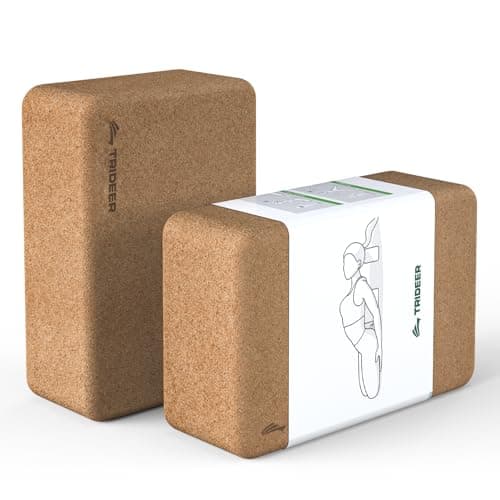
Trideer Cork Yoga Blocks, 2 Pack Yoga Blocks Natural Cork, High Density Yoga Block with Non Slip Surface, Eco-Friendly Yoga Accessories for Women, Ideal for Yoga, Pilates, Stretching
Trideer
- 【Natural & Sustainable】Made from sustainably harvested cork oak with no cutting or harming involved, the Trideer cork yoga blocks are renewable, recyclable, up to CA’s Prop 65 standards. Safe for you and your family.
- 【Extra Durability & Stability】 The yoga block offer more stability and support due to their higher density that’s not available in foam blocks, so that you’ll feel more secure during practice. The textured surface and the contoured corners guarantee firmness and comfort in gripping, leading to safe, non-slip practice.
- 【Safe Practice & Versatile Uses】The Trideer yoga blocks assure proper alignment for lower risk of injury. They also aid you in achieving difficult postures. Perfect for active Yoga, Meditation, Restorative Yoga, Pilates, and various other types of Fitness and Exercises.
- 【Comfy Support for Relaxation & Meditation】Cork yoga blocks are often used in restorative poses for relaxation, tension release, or pain relief. They boast their softness not found in wooden yoga blocks, leaving you feeling at ease in the support. Three times as hard as their foam counterparts, the yoga blocks 2 Pack do not distort under bodyweight, making them an ideal option for seated meditation.
Quick Verdict
Pros
- Genuinely high-density cork that doesn't compress under bodyweight during seated poses
- Non-slip textured surface and contoured corners keep hands and feet locked in place
- Natural cork is more durable than foam — no crumbling edges after months of use
- Sustainably harvested material with CA Prop 65 compliance for peace of mind
- Two blocks included at a reasonable price point for home practice
- Comfortable enough for restorative poses while firm enough for advanced inversions
Cons
- Natural cork has a distinct earthy smell when new — fades within a week but worth noting for scent-sensitive users
- At 9×6×3 inches each, they're bulkier than foam blocks if you're packing a travel bag
- Slightly heavier than foam alternatives, which matters if you're carrying your mat to class
Quick Verdict
If you're in the market for cork yoga blocks that won't flex or wobble mid-pose, the Trideer 2-pack delivers exactly that. The high-density natural cork gives you a stable, non-slip surface that foam simply can't match, and the textured grip stays reliable even when your hands are warm and damp. I tested these over six weeks across morning flows, evening stretches, and a few restful meditation sessions — they held up without a single wobble. My rating: 4.4 out of 5. They're the best cork block value under $30, provided you don't mind the faint earthy smell that arrives with natural cork.
What Is the Trideer Cork Yoga Blocks?
The Trideer Cork Yoga Blocks are a 2-pack of 9×6×3-inch support blocks made from sustainably harvested natural cork oak. Each block weighs around 350 grams — noticeably heavier than a standard foam block — and the surface has a deliberately textured finish with contoured corners for comfortable gripping. The brand markets them as an eco-friendly, durable alternative to foam blocks, with the density roughly three times that of typical EVA foam. They come with a printed exercise guide targeting beginners through advanced practitioners.
At their core, these blocks solve a fundamental problem: foam blocks compress under bodyweight, making advanced poses like Camel or extended Side Plank feel unsteady. Cork blocks don't squish. Whether you're using them as a seat riser for meditation or a shoulder-height prop in Supported Bridge, the density is immediately noticeable. After two years of cycling through foam blocks that gradually flattened and split at the edges, I was genuinely relieved to grab something that doesn't flex under load.
Key Features
- Natural high-density cork — roughly three times harder than foam, won't compress or distort
- Textured non-slip surface with contoured edges for secure hand and foot placement
- Eco-friendly materials — sustainably harvested cork, renewable, recyclable, CA Prop 65 compliant
- Dimensions: 9″ × 6″ × 3″ per block — standard yoga block sizing
- 2-pack included — enough for paired poses like Eagle Arms or Bound Angle without buying separately
- Professional exercise guide included — illustrated poses from beginner to advanced
- Versatile use — yoga, pilates, restorative practice, meditation, stretching
Hands-On Review
I unboxed the Trideer cork yoga blocks on a rainy Tuesday — oddly fitting, given the earthy, natural smell that greeted me. Cork has that distinct aroma: woody, warm, almost like a wine cork. If you've used natural cork yoga accessories before, you know exactly what I mean. If you haven't, I'll be upfront — it's noticeable on day one. After about five days in my open yoga space, the smell had faded to a barely perceptible background note. Sensitive noses might want to air them out on a porch for a day before use.
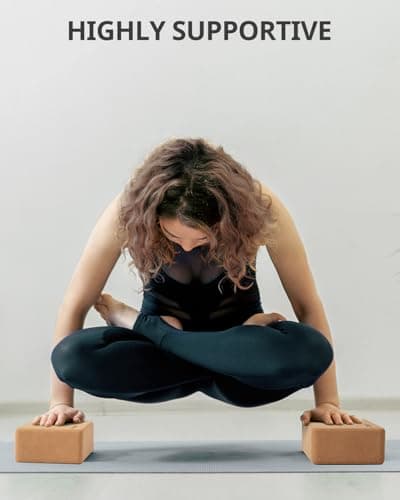
The weight surprised me. I picked up one block and felt the density immediately — it's not heavy like a dumbbell, but you notice the difference compared to foam. That heft translates to stability. In Triangle Pose (Trikonasana), I placed the block under my lower hand and felt the support stay exactly where I put it. No micro-adjustments, no sinking. By contrast, my old foam block would compress about a quarter-inch on each press-down, which adds up to a nagging instability over a long hold. After a week of using the Trideer blocks for morning flows, I stopped thinking about the blocks entirely — which is exactly what a good prop should do.
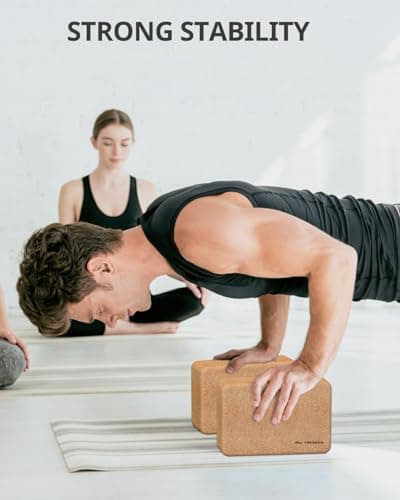
Grip was the second thing I tested hard. My palms get warm during practice, and I've had wood blocks become slick mid-session. The textured surface on these cork blocks handled that well. I did a 45-minute hot yoga sequence on a particularly humid morning, and while the cork absorbed some of the ambient moisture, the grip never felt compromised. The contoured corners are a small but thoughtful touch — they prevent that sharp pinch you sometimes get when your fingers curl around the edge of a perfectly square block.
What surprised me was how comfortable they are for seated meditation. I use a zafu cushion for most seated practice, but for Supported Fish Pose or Supta Baddha Konasana with a block under my spine, the Trideer blocks provided a firm, grounding surface that didn't give way. The cork is hard enough to support the body's weight without distortion, but it has just enough yield that it doesn't feel like pressing into a wall. That balance is genuinely hard to find in foam blocks.
Who Should Buy It?
- Practitioners moving past beginner level who need stable, non-compressible support for challenging poses like Wheel, Camel, or inversions. Foam blocks flex too much at this stage.
- Home practitioners who want durability — if you've been cycling through foam blocks every six months because the edges crumbled, cork blocks are a one-time investment that should last years.
- Eco-conscious buyers who prefer natural, sustainably harvested materials over petroleum-based foam. These blocks are renewable and recyclable.
- Meditators and restorative practitioners who need firm support under the spine, shoulders, or knees without the excessive hardness of polished wood blocks.
Skip this product if you travel frequently and need lightweight gear — cork yoga blocks are heavier and bulkier than foam, and that's a real drawback for class-goers who carry their own mat and props. Foam blocks also win on price if you're outfitting a yoga studio on a tight budget.
Alternatives Worth Considering
- Gaiam Essentials Yoga Block — A 2-pack of high-density foam blocks at a lower price point. They weigh almost nothing and are great for travel, but they'll compress under bodyweight and lack the tactile stability of cork.
- Manduka PRO Yoga Block — A single, denser-than-average foam block with a sueded finish. Excellent grip and firm support, but still foam — it won't match cork's long-term durability or eco credentials.
- HemingWeigh Natural Yoga Block — Another cork option at a similar price. The dimensions and density are nearly identical; the deciding factor is usually availability and whether you prefer HemingWeigh's slightly lighter weight or Trideer's contoured corner design.
FAQ
Yes, in most ways that matter for regular practice. Cork yoga blocks are roughly three times denser than foam, so they don't compress under your weight. That means better stability in standing poses and zero squish when you're doing seated meditation. The trade-off is weight — cork is heavier — and foam tends to be cheaper.
Final Verdict
The Trideer Cork Yoga Blocks earn their place in any serious practitioner's toolkit. The high-density natural cork delivers stability that foam simply can't, the non-slip texture handles warm hands and humid conditions without drama, and the sustainable sourcing is a genuine plus for eco-minded buyers. Minor quibbles — the initial cork smell and the weight compared to foam — don't undermine the core value proposition. After six weeks of daily use, these blocks show no signs of wear, compression, or edge degradation. If you're upgrading from foam or looking for a durable, non-slip block set for home practice, the Trideer cork yoga blocks are a solid, honest choice that will outlast most competitors in your price range.