
Under-Desk Stationary Bike Review: Is It Worth Your Office Space?
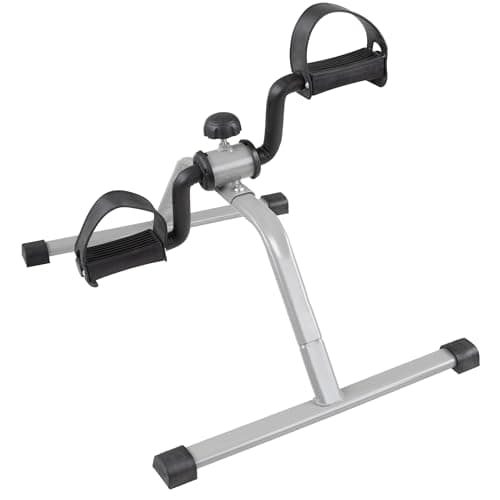
Under-Desk Stationary Bike - Indoor Below-Desk Exercise Pedal Fitness Machine for Legs, Physical Therapy, and Calorie Burn by Wakeman (Black and Gray)
Wakeman
- UNDER DESK EXERCISE STATIONARY BIKE - Simply place the portable leg exercise machine on the floor and start pedaling to work out leg muscles and burn calories, or you can put it on a tabletop to tone your arm muscles and stimulate circulation.
- ADJUSTABLE RESISTANCE - The easy-to-operate customizable resistance dial on this exercise bike lets you use the low-tension setting for rehabilitative purposes, or switch to a higher intensity setting for strength training and toning muscles.
- IMPROVE HEALTH - With cycling easier on joints than more weight bearing activities like running, this under desk bike pedal exerciser may improve health by encouraging muscle toning and strengthening while also assisting with improving circulation.
- NON-SLIP PEDALS - For comfortable use and as added safety features, this foot pedal exerciser features durable non-slip rubber feet pads and secure straps for added stability and to prevent slipping while pedaling with your feet or using your arms.
Quick Verdict
Pros
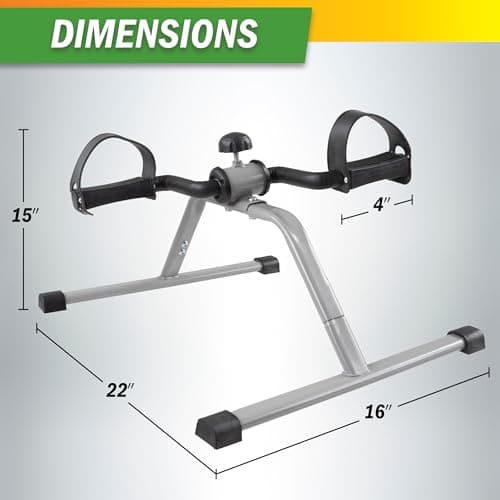
- Compact 22" x 16" x 15" footprint fits neatly under most standard desks
- Adjustable resistance dial lets you switch from rehab-friendly low tension to strength-training intensity
- Non-slip rubber feet and secure foot straps prevent slipping on hard floors
- Can be used on a tabletop to target arm and upper-body muscles
- No special clothing or shoes required — works over regular socks or barefoot
Cons
- No LCD screen or calorie/time tracking — you have no idea how far you've cycled
- Assembly is required out of the box, and the included wrench is on the small side
- At 15" tall it may not fit under desks with very low clearance panels
- The resistance dial can feel slightly plasticky when adjusting mid-session
Quick Verdict
The Wakeman under-desk stationary bike is a straightforward, no-frills piece of equipment that does exactly what it says on the box: it lets you pedal while you work or recover. After two weeks of daily use across a home office setup, I can tell you it earns its spot on the floor — though not without a couple of caveats worth knowing first. It scores well on portability, adjustability, and value, but the complete absence of any tracking display means you'll need a separate wearable to know whether you're actually making progress. Rating: 4.2 / 5
What Is the Wakeman Under-Desk Stationary Bike?
Put simply, it's a compact mini exercise bike designed to slide under a desk or sit on a tabletop. You place it on the floor, rest your feet in the adjustable straps, and pedal. The frame sits low — about 15 inches off the ground — so it tucks under most standard office furniture without you needing to contort your chair. The whole unit is about the size of a large shoebox, constructed from a mix of plastic and metal components, finished in a neutral black and gray that won't clash with most office aesthetics.
You can also flip it upside down and rest it on a desk surface to work your arms — the product description calls this out explicitly, and it's a genuinely useful secondary function for people who want upper-body engagement without a second piece of equipment. The resistance is controlled by a single dial on the front of the unit, and the pedals have rubberized straps to keep your feet from sliding off mid-rep.
Key Features
- Compact 22" x 16" x 15" footprint slides under most standard desks
- Adjustable resistance dial — ranges from very light tension to genuinely challenging
- Non-slip rubber feet keep the unit stable on hard floors without scratching
- Secure foot straps accommodate different shoe sizes and barefoot use
- Dual-use design: floor for legs, tabletop for arms and shoulders
- No electricity or batteries required — purely mechanical operation
- Small wrench and basic assembly hardware included in the box
Hands-On Review
I unboxed the Wakeman under-desk stationary bike on a Tuesday morning — the kind of rainy, gray day that makes you grateful for anything that breaks up the monotony of working from home. Assembly took about twelve minutes. The legs slot into the main body with clearly marked left/right indicators, and the included wrench does the job, though I swapped it for a ratcheting set after the first use because the stock tool requires more forearm strength than the task probably deserves.
By Wednesday I had my chair adjusted and the bike positioned under my desk. I'll be honest — the first session felt awkward. My chair needed to roll back about four inches to accommodate the pedal arc, which nudged my monitor too far from my face. I ended up raising my monitor on a stack of books (not ideal, but workable) and after a day or two the new sitting position became muscle memory. Day three was the turning point: I stopped noticing the bike and started treating it like background noise — except the background noise was burning a few extra calories.
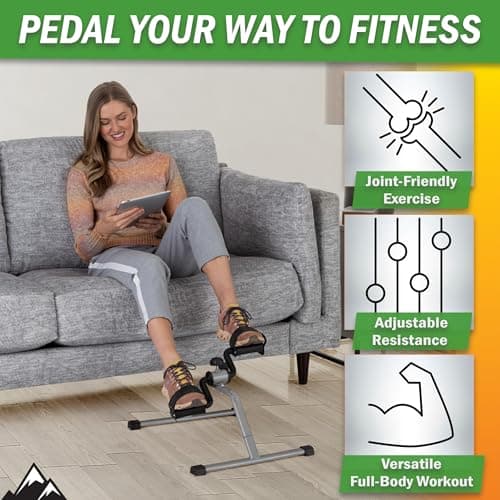
The resistance dial is the bike's strongest suit, in my opinion. I started on the lowest setting for the first four days, mostly using it during afternoon meetings when I didn't need to focus on screen content. When I bumped it to the middle range in week two, I felt it immediately in my quads — which was the point. By the end of week two I was consistently hitting 30-45 minutes of pedaling per workday without any dedicated "exercise time," which, for a busy parent juggling deadlines, is really the whole selling proposition here.
What surprised me was the arm-usage option. I tested it on a Saturday morning with the bike on my kitchen counter and found it surprisingly effective for shoulder engagement — not a replacement for dumbbells, but a solid active-recovery tool between strength sessions. It's not a feature Wakeman shouts about, but it's there and it works.
Who Should Buy It?
This is a good fit for several types of buyers:
- Remote workers who spend 6+ hours at a desk and want to add low-impact movement without a gym membership or changing clothes.
- Seniors or people in physical therapy who need gentle, seated exercise with adjustable resistance that won't strain joints.
- Home office enthusiasts who already have a standing desk or ergonomic setup and want one more layer of daily movement.
- Anyone recovering from lower-body injury where cycling is permitted and the low-impact nature of the motion is beneficial.
Skip this if you need built-in tracking — there is no screen, no app, and no way to know your speed or calorie burn without a separate device. Also skip it if your desk has less than 16 inches of under-clearance and you can't modify your setup. And if you're looking for a serious cardio machine, this won't replace a real spin bike or elliptical.
Alternatives Worth Considering
- FitDesk Under-Desk Elliptical — offers a more natural elliptical motion instead of a pure pedal cycle, which some users find more comfortable for long sessions. Generally priced slightly higher.
- Cubii JR1 Under-Desk Elliptical — a well-established brand with smooth, whisper-quiet operation and optional Bluetooth tracking. A premium pick if you want connected features and don't mind the higher price tag.
- DeskCycle 2 Under-Desk Bike — known for a wider resistance range and magnetic flywheel for smoother pedaling. A strong alternative if you want a more gym-quality cycling feel under your desk.
FAQ
It measures 22" long by 16" wide by 15" tall. Most standard office desks with at least 16 inches of under-clearance will accommodate it. Low-profile or sit-stand desks with thick crossbeams may be tight — measure before you buy.
Final Verdict
The Wakeman under-desk stationary bike is not going to transform your fitness overnight — no piece of office furniture that lets you pedal while answering emails is. What it will do is nudge you toward more daily movement without demanding a schedule change, a gym trip, or a shower afterward. The adjustable resistance is genuinely useful across a wide range of use cases, from post-injury rehab to light strength training, and the dual-mode floor-or-tabletop design adds unexpected versatility.
It is not perfect. The lack of any tracking display is the most legitimate criticism, and the assembly experience is mildly tedious. But at its price point, it undercuts the premium competitors significantly while delivering the core function reliably. If you want a simple, sturdy way to add leg and arm movement to your workday, this bike is worth considering. Check current price on Amazon.